
In today’s digital world, e-commerce has become one of the fastest-growing ways to buy and sell products online. From clothing and electronics to groceries and beauty products, customers prefer shopping online because of its convenience and variety. However, with increasing competition, simply launching an online store is not enough. Businesses need effective e-commerce marketing strategies to attract potential customers, build trust, and increase sales.
What Is E-commerce Marketing?
E-commerce marketing is the process of promoting an online store and its products through digital marketing channels. Its primary goal is to drive traffic to a website, convert visitors into customers, and encourage repeat purchases.
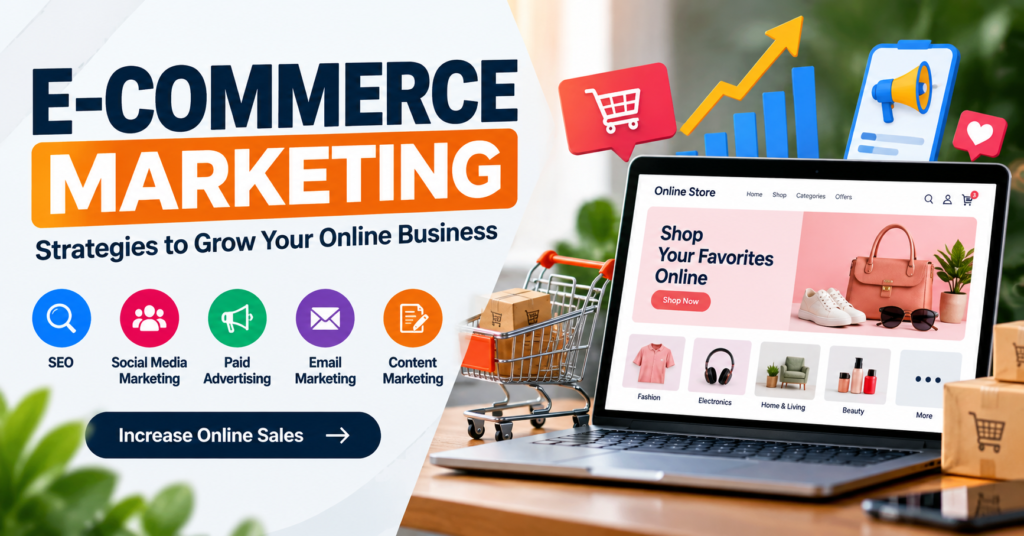
Businesses use different marketing techniques, including search engine optimization (SEO), social media marketing, email marketing, paid advertising, and content marketing, to reach their target audience.
Why Is E-commerce Marketing Important?
E-commerce marketing helps online businesses reach a wider audience and compete effectively in the digital marketplace. Its major benefits include:
- Increased Brand Awareness: Helps more people discover your online store.
- Higher Website Traffic: Attracts potential customers through search engines and social media.
- Improved Sales: Encourages visitors to purchase products through targeted campaigns.
- Better Customer Engagement: Builds relationships through personalized offers and useful content.
- Customer Retention: Encourages existing customers to return and shop again.
Top E-commerce Marketing Strategies
1. Search Engine Optimization (SEO)
SEO helps your online store appear in search engine results when customers look for relevant products. Use relevant keywords in product titles, descriptions, URLs, and blog posts. Optimize website speed, mobile usability, and product images to provide a better shopping experience.
2. Social Media Marketing
Platforms like Instagram, Facebook, and Pinterest allow businesses to showcase products, connect with audiences, and generate sales. Share engaging posts, product demonstrations, customer reviews, and short videos to attract potential buyers.
3. Pay-Per-Click Advertising (PPC)
Paid advertising through Google Ads and social media platforms can help businesses reach people who are interested in their products. Target relevant audiences, create compelling ad copy, and monitor campaign performance to improve your return on investment.
4. Email Marketing
Email marketing is an effective way to maintain communication with customers. Send newsletters, exclusive discounts, product recommendations, and abandoned-cart reminders to encourage purchases and repeat business.
5. Content Marketing
Creating valuable content helps businesses educate customers and build trust. Publish buying guides, product comparisons, how-to articles, and informative blog posts related to your products.
6. Influencer Marketing
Collaborating with relevant influencers can introduce your products to new audiences. Choose creators whose followers match your target customers, and focus on authentic product demonstrations and honest recommendations.
7. Conversion Rate Optimization
Attracting visitors is only one part of successful e-commerce marketing. Your website should also make purchasing easy. Use clear product images, transparent pricing, customer reviews, simple checkout processes, and visible calls to action.
Common E-commerce Marketing Mistakes to Avoid
Many online businesses struggle because they overlook important marketing fundamentals. Avoid these common mistakes:
- Ignoring mobile users and website loading speed.
- Using poor-quality product images or incomplete descriptions.
- Targeting the wrong audience with advertisements.
- Neglecting customer reviews and feedback.
- Failing to track website traffic, conversions, and sales.
- Offering discounts without measuring profitability.
How to Measure E-commerce Marketing Success
To understand whether your marketing strategies are working, track important performance indicators such as website traffic, conversion rate, customer acquisition cost, average order value, abandoned-cart rate, and return on advertising spend.
Review these metrics regularly and use the results to improve your campaigns and marketing budget.
Conclusion
E-commerce marketing is essential for businesses that want to increase online visibility, attract qualified customers, and grow their sales. By combining SEO, social media marketing, paid advertising, email campaigns, and conversion optimization, businesses can create a strong online presence and build long-term customer relationships.
Start with the strategies that best match your audience and budget, measure your results, and continuously improve your approach to achieve sustainable growth.
Call to Action: Want to grow your online business? Start implementing these e-commerce marketing strategies today to attract more customers and increase your online sales.
Frequently Asked Questions (FAQs)
1. What is e-commerce marketing?
E-commerce marketing is the process of promoting an online store and its products using digital channels to attract customers and increase sales.
2. Why is e-commerce marketing important?
E-commerce marketing helps businesses increase brand awareness, drive website traffic, reach potential customers, and improve online sales.
3. What are the best e-commerce marketing strategies?
The best strategies include SEO, social media marketing, PPC advertising, email marketing, content marketing, and influencer marketing.
4. How does SEO help e-commerce businesses?
SEO improves an online store’s visibility in search engine results, helping potential customers discover products and increasing organic traffic.
5. Is social media marketing effective for e-commerce?
Yes, social media marketing helps businesses showcase products, engage with customers, build brand awareness, and generate sales.
6. How can I increase e-commerce sales?
You can increase sales by optimizing product pages, offering a smooth checkout experience, running targeted ads, using email marketing, and providing excellent customer service.
7. What is the role of content marketing in e-commerce?
Content marketing attracts and educates customers through blogs, buying guides, product comparisons, and videos, helping build trust in a brand.
8. How can I measure e-commerce marketing performance?
You can measure performance using website traffic, conversion rate, customer acquisition cost, average order value, and return on advertising spend.
9. Which platforms are best for e-commerce marketing?
Google, Instagram, Facebook, Pinterest, and email marketing platforms can help businesses promote products and reach their target audiences.
10. How much does e-commerce marketing cost?
The cost depends on business goals, advertising budget, competition, and the marketing channels used. Businesses can start with organic marketing and gradually invest in paid campaigns.